













The role of a CEO goes beyond having all the answers or sitting at the top of a hierarchy; to fostering a culture of empowerment, staying adaptable in the face of uncertainty, and learning to lead through influence rather than just authority. When approached with humility, leadership becomes a collaborative journey of growth rather than a solo pursuit of perfection.
16 Entrepreneurs share the common misconceptions they held about leadership before stepping into the CEO role
From dismantling the myth of the “lonely at the top” mentality to realizing that vulnerability is actually a strategic strength, there are many lessons learned only through experience. We asked seasoned CEOs and founders to reveal the one belief they held that was completely overturned by reality, and here’s what they shared:
1. Being a CEO Is the Hardest Leadership Role

One belief I had about being a CEO that turned out to be wrong was that it would be the hardest leadership role I’d ever take on. I launched my buyer’s agency during maternity leave and quickly realised that leading a business and leading a family require many of the same skills, clarity, resilience, and emotional regulation. In many ways, being the “CEO” of a household is the more relentless role, because there are no off switches and no performance reviews, just constant responsibility. What I’ve learned is that leadership isn’t about having all the answers; it’s about steadiness under pressure.
Thanks to Rebekah Antognelli, Brightside Buyers!
2. CEOs Need to Control Every Detail

I used to genuinely believe that a CEO is the person who’s smarter than everyone else, keeps everything in their head, and controls every little detail. It turned out to be a dead-end model: it makes the company dependent on one brain and turns the CEO into a bottleneck. The real job of a CEO is to set the standard, build the system, and ruthlessly choose what not to do. I lock in clear quality criteria and make final decisions strictly against them, so the team can operate autonomously, and the outcome stays predictable. Instead of searching for “perfect” people, I build filters: test assignments, benchmarks, and I part ways quickly with those who can’t meet the bar.
Thanks to Alex Zimin, MultiPillow!
3. You Need Wealth to Succeed as a CEO

I believed that unless you come from a wealthy family, you can’t build a portfolio of investment properties and retire young, that early real estate success was reserved for those with generational money. What I learned is that consistency, discipline, and smart leverage matter far more than your starting balance. I began with a small property, educated myself relentlessly, and reinvested every dollar of equity and cash flow back into the next deal. Within a decade, I built a portfolio that now funds my lifestyle and continues to grow on its own. Starting with very little isn’t easy, but it’s absolutely possible with the right strategy and persistence.
Thanks to Mohi Gholamy, Maple Group!
4. CEOs Have to Know Everything

I thought a successful CEO has to know it all in terms of being “business-minded”. Initially, this scared me…almost to the point that my business froze. It required an entire mental shift, a change in deeply ingrained paradigms, and a huge uplevel of my own self-image. I have always had a deep passion to serve in the way that I serve best, and there were many lessons in this shift in mindset. Here are some of the lessons I have learnt about being a CEO: You do not need to know the “how”, just keep moving towards your mission and purpose every day, the how shows up in your movement forward towards your goal.
Thanks to Suzana Mihajlovic, Your2Minds!
5. The CEO Should Always Have the Right Answers

One belief I had about being a CEO that turned out to be completely wrong was that I needed to have all the answers. I thought leadership meant certainty at all times, that a CEO should be the most knowledgeable person in the room and never show doubt. What I’ve learned instead is that true CEO leadership is about decision-making, not omniscience. It’s about creating vision and being willing to evolve. The moment I stopped trying to be the expert in everything and stepped fully into being the architect of the business, everything changed.
Thanks to Sasha Eburne
6. Great CEOs Don’t Make Mistakes

I believed being CEO meant making fewer mistakes than everyone else. That perfectionism created a culture at Level 6 Incentives where people were afraid to experiment, which is death for innovation. When your business is designing employee rewards and customer rebates that need to evolve with market demands, you can't afford a team that plays it safe. I had to publicly own some of my bigger failures before people felt permission to take smart risks. Now we have a culture where calculated risks are celebrated, and failures are just data points that make us better.
Thanks to Ben Wieder, Level 6 Incentives!
7. Being a CEO Means Leading Alone

I thought becoming a CEO meant carrying the weight alone, that asking for input showed weakness rather than wisdom. That belief was completely backwards. Running a law firm taught me that the loneliness narrative is a trap; one that limits growth and breeds poor decisions. The attorneys and team members around me see client needs, case strategies, and operational improvements I'd never spot alone. Embracing collaboration didn't make me less of a leader; it made me exponentially more effective. Now I understand that the strongest CEOs aren't the ones who pretend to have every answer, but those who create cultures where everyone's expertise elevates the mission.
Thanks to Justin Lovely, Lovely Law Firm!
8. Work-Life Balance Isn’t Possible for CEOs

I used to believe that being a CEO meant sacrificing everything; that work-life balance was just a fantasy sold to employees, not something founders could actually achieve. Remote work didn't just enable balance; it demanded it. Without the theater of office presence, I had to build systems that actually worked rather than relying on proximity management. I learned to trust my team with real autonomy, set boundaries that protected my energy, and design workflows around outcomes instead of hours logged.
Thanks to Frederic S., RemoteCorgi!
9. Experience Prevents Poor Decisions

I believed that three decades of courtroom experience would insulate me from errors in judgment. I was wrong. What I've learned is that every nursing home neglect case, every construction accident, every family trusting us with their most vulnerable moments; they all demand fresh eyes and renewed vigilance. Experience teaches you what questions to ask, but it's humility that keeps you asking them. The day you think you've seen it all is the day you stop seeing what's right in front of you.
Thanks to Steve Malman, Malman Law!
10. CEOs Must Always Project Certainty

I once believed being a CEO meant projecting total certainty and maintaining a tight grip on every detail. I was wrong. Success isn't about ego; it’s about listening and adjusting on the fly. In family law, clients don’t need a polished performance—they need reliable judgment during crises. Real authority stems from consistency and the discipline to do hard work correctly. Resilience isn't shouted; it is built quietly through preparation and the respect earned over time.
Thanks to Charlotte Christian, Summit Family Law!
11. Technical Expertise Is What Makes a Great CEO

I entered the legal profession believing that comprehensive knowledge of case law and courtroom strategy would define successful leadership. My marketing and business education, & my law degree from Mercer, gave me confidence that mastering legal theory was the path forward. What I underestimated was how much leadership requires understanding people, not just precedents. Years of representing catastrophic injury victims taught me that technical legal expertise means nothing if you can't translate complex insurance disputes into clear answers for families dealing with trauma.
Thanks to Tony Kalka, Kalka Law!
12. CEOs Should Stay Removed from Day-to-Day Work
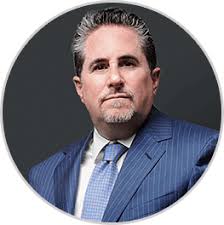
I used to think being a CEO was about having the final word and keeping a clear line between “leadership” and the actual grunt work. I was wrong. Running a defense firm taught me that the title doesn't insulate you; it just gives you more responsibility. The real job is staying close to the details: the clients, the courts, and the people who are trusting you with their freedom. I’m in Superior or Municipal court almost every day because I’ve realized that decisions made from a distance usually fail real people. When I stopped trying to act like a typical executive and just started being present, everything got better.
Thanks to Jonathan F. Marshall
13. CEOs Need to Be “Always On”

The biggest belief I held was that I had to be ‘on' all the time. That I should always be available, always focused on getting more clients, more money, building more stuff. That my ambition and care are coupled with how much I produce. And maybe for some people that works, but that isn't true for me – that's a recipe for burnout. My ambition is coupled to what I care about – not how much I create or how much I earn. I take clients that I can truly help and care for – not just any brand. The content I produce isn't because I have to, it's because I want to, and it's valuable.
Thanks to Aubrey Wallace, Dandelion Branding!
14. You Need Perfect Information Before Making Decisions

I used to think that the key for a CEO was to know everything before making a decision. What I learned through decades of installing commercial fencing across Arizona is that waiting for perfect information means missing opportunities. Instead of overanalyzing the project and considering every aspect of the job down to the smallest detail, I just let the experience and skills of the crew and the ability to fabricate the material in-house get the job done ahead of schedule. It was just a matter of knowing when you had enough information and taking action.
Thanks to Tom Curtis, Western Fence Company!
15. Leadership Is Mostly About Strategy and Vision

I believed leadership was mostly about planning and vision. Walking job sites, seeing repairs and installations firsthand, and learning from our team has been invaluable. It informs smarter decisions, helps improve processes, and ensures every customer receives reliable, high-quality service. Being engaged with the fieldwork has also shaped the culture of our company, fostering respect for expertise and encouraging collaboration.
Thanks to John Gabrielli, Air Temp Solutions!
16. Showing Vulnerability Weakens Leadership

I walked into this thinking CEOs had to project confidence at all times. Coming from a marketing background where you're constantly selling ideas and campaigns, I figured that same energy needed to carry over into leadership. What I got completely wrong was underestimating how much people value honesty over confidence. When I started admitting to my team that I was figuring things out as we went, or that a decision didn't go the way I hoped, they actually trusted me more. Turns out, being vulnerable and transparent makes you a stronger leader than pretending you've got everything under control.
Thanks to Cory Arsic, Canadian Parent!